The ute is the tradie’s office, store room and shed. Set it up well and you find the right bit in ten seconds. Set it up badly and you spend a quarter of an hour a day digging through a tub of loose gear, and you’re an easy target for thieves.
This guide compares the four common ways to store tools on a ute: drawer systems, canopies, tray toolboxes and an open tub with boxes. It also covers the rules people forget: payload and load restraint. We’ve based the rules on the National Transport Commission’s Load Restraint Guide for Light Vehicles. We haven’t tested specific brands, and we don’t quote fitted prices, because they vary too much by ute model and supplier to be useful.
The four main setups
| Setup | Security | Access | Payload cost | Weather |
|---|---|---|---|---|
| Canopy on a tray or tub | High, if lockable | Good with side doors | Medium to high | Fully enclosed |
| Tray with toolboxes | High in boxes | Very good | Medium | Boxes only |
| Drawer system in a tub | Medium to high | Excellent | Medium to high | Needs a lid or canopy |
| Open tub with loose boxes | Low | Poor | Low | Poor |
These are general trade-offs, not test results. Weight and security depend heavily on the brand and materials.
Canopies
A canopy turns the back of the ute into a lockable, enclosed box. Side-opening canopies with shelves or drawers inside give you a mobile workshop.
Canopy
Good
- Fully enclosed and lockable, which suits most insurance conditions
- Keeps tools dry and out of sight
- Side doors give access without climbing in
- Can be fitted with shelves, drawers and lighting
Not so good
- Heavier than most other options, so less payload
- Limits tall or bulky loads
- Higher up front cost
- Roof loads need a rated rack
Tray with toolboxes
A flat steel or aluminium tray with toolboxes underneath or along the sides is the classic trade setup. Big loads go on top, tools go in locked boxes.
Tray and toolboxes
Good
- Flat deck for sheet material, pipe and bulky loads
- Under-tray and side boxes keep tools locked away
- Easy to see and reach every box
- The NTC guide calls connected toolboxes ideal for containing tools
Not so good
- Anything on the deck needs restraining every trip
- Tools outside the boxes are exposed
- Changing from a tub to a tray costs a lot
- Box seals need maintenance to stay dust and water tight
Drawer systems
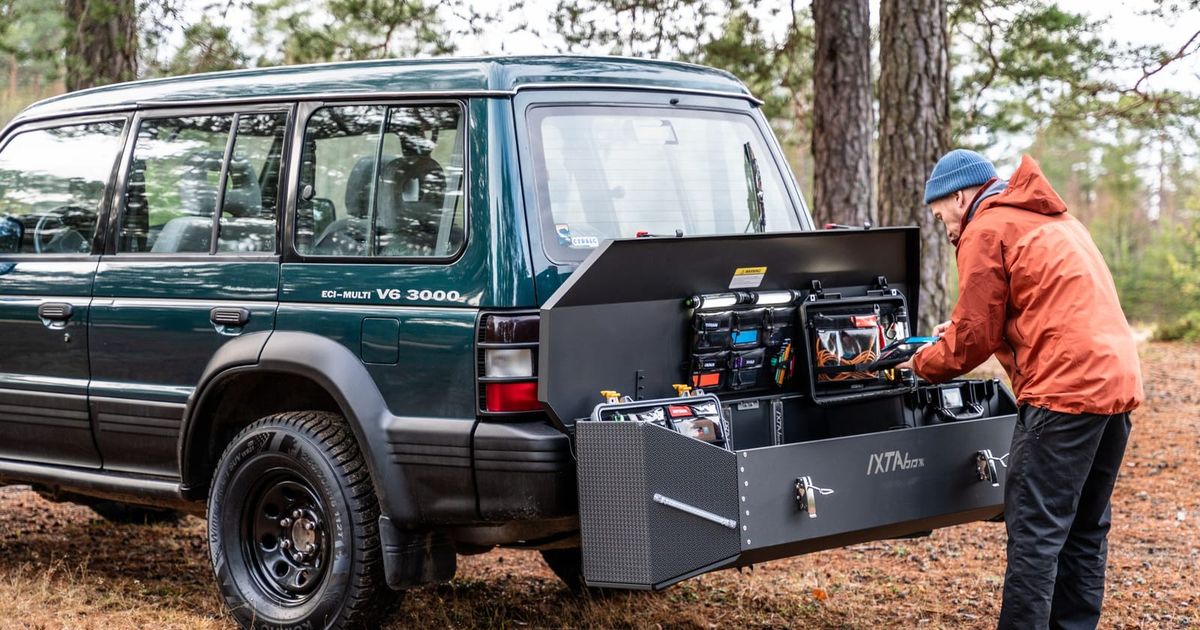
Drawers fit in the tub and slide out to the tailgate, so you reach everything without climbing in. Many tradies pair them with a hard lid or canopy.
Drawers
Good
- Best access of any setup
- Everything has a place, so you see what's missing
- Leaves a flat floor on top for loads
- Works with a lid or canopy for security
Not so good
- Raises the floor height and cuts tub space
- Adds weight low in the tub
- Without a lid or canopy, the top is exposed
- Fitting varies by ute model
Open tub with boxes
It’s where most people start. It’s cheap and light, but it’s the worst for security and the hardest to keep organised.
Open tub
Good
- Cheapest and lightest
- Full tub space for loads
- No fitting required
- Easy to change as your needs change
Not so good
- Tools exposed to weather and theft
- Loose gear needs restraint every trip
- Often fails insurance security conditions
- Time wasted finding things
Payload: the number most people skip
Your ute has a gross vehicle mass (GVM) set by the manufacturer. The NTC guide explains that this includes the vehicle and everything in or on it: driver, passengers, fuel and goods. Your usable payload is the gap between the GVM and what the ute weighs as it sits.
Every storage option eats into that. A canopy, drawers, a bull bar, a roof rack, a long-range tank and a full tool load can add up quickly, and running over GVM can affect safety and your insurance.
Load restraint: the rules that apply to every ute
The NTC Load Restraint Guide for Light Vehicles covers cars, utes, vans and trailers up to 4.5 tonnes GVM. Its performance standards say a load must be restrained so it can’t move relative to the vehicle, except where movement can’t affect stability and the load can’t be dislodged. The restraint has to hold the load under:
- 0.8 g braking in a forward direction
- 0.5 g in a rearward direction
- 0.5 g sideways
- 0.2 g vertically, if you rely on friction
In plain terms, that’s a hard emergency stop or a sharp swerve. The guide also says:
- Toolboxes connected to the vehicle are ideal for containing tools and equipment.
- A ute tray contains a load only if the load’s centre of gravity sits below the side of the tray. Above that, use another restraint.
- Light items such as pipe offcuts should go in a box with a lid or be covered so they can’t blow out.
- Tarps are not effective restraint on their own for most loads, unless rated.
- Cargo nets are effective for utes up to their rated capacity.
For long loads, the guide sets rear overhang at 60% of the wheelbase or 3.7 metres (whichever is less) from the rear axle, except in WA. Side projections are limited to 150 mm, with total width no more than 2.5 metres. Ladders and pipe hanging out the back need the flag or light described above.
Load restraint gear on Amazon Australia
Affiliate links (paid links). Open Amazon in a new tab. Check the rated capacity on anything you buy for load restraint.
Roof racks and ladders
Ladders, conduit and long pipe usually end up on the roof. Use a rack rated for the load and check your ute’s roof load limit in the owner’s manual, because roof racks and anything on them also count towards the GVM. Strap long items at more than one point, and keep the overhang within the limits above. A rack-mounted ladder lock or a lockable tube for conduit and pipe is worth it if you park on the street.
For load ratings, overhang limits and flag rules, see our ute roof racks and ladder racks guide.
Security and insurance
Thieves target utes because the tools are valuable and easy to sell. Many portable equipment policies only pay theft claims after forced entry to a locked vehicle or where tools were locked to it. That makes the storage choice part of your insurance. Our tools insurance guide covers the conditions in detail.
- Lock everything, every time, even at the servo.
- Keep tools out of sight. Enclosed beats exposed.
- Don’t leave tools in the ute overnight unless your policy allows it and you park somewhere secure.
- Record serial numbers and mark your tools. Our drill brands guide explains why registering tools also helps with warranty.
Which setup suits you?
- Sparkies, plumbers, service techs: canopy with internal shelving, or drawers with a lid. You carry lots of small parts and need quick access.
- Chippies and builders: tray with toolboxes, so the deck stays free for timber and sheet material.
- Landscapers: tray with side boxes and a rated cargo net for loose loads.
- Starting out: a lockable tub lid and a couple of lockable boxes now, a proper setup once you know how you work.
While you’re setting up, our workwear guide covers what to wear on the job. Next step: find your ute’s GVM in the owner’s manual or on its plate, then price storage options against what’s left.
Common questions
How much weight do drawers and a canopy add?
It varies a lot by material, size and brand, so check the manufacturer's stated weight before you buy. Every kilo of storage comes off your payload, which is the gap between the gross vehicle mass and what the ute weighs empty.
Is a tarp enough to hold a load in the tray?
Usually not. The national Load Restraint Guide for light vehicles says tarps are not effective restraint systems on their own for most loads, unless they are rated. Use a rated cargo net, tie-downs or a lidded box for light items.
How far can ladders or pipe stick out the back?
Under the national light vehicle guide, rear overhang is limited to 60% of the wheelbase or 3.7 metres, whichever is less, measured from the rear axle, in all states and territories except Western Australia. WA uses 1.2 metres from the end of the vehicle. The guide also says rear projections over 1.2 metres, or ones that are hard to see, need a warning signal: a brightly coloured flag at least 300 mm by day, and a red light visible from 200 metres at night.
Will tools in a locked canopy be covered by insurance?
Locked, fully enclosed storage is what many portable equipment policies ask for, so it gives you the best chance. Read the security conditions in your own policy, as some exclude theft from vehicles or overnight storage.