Every tradie knows someone who’s walked out to the ute at 6am to find the canopy jemmied and the drill kits gone. The tools are only half of it. The other half is the lost day, the jobs you can’t start and finding out whether your insurance actually pays.
This guide explains how tools insurance works in Australia, what triggers a theft claim, what’s commonly excluded and how to set up your cover so a claim goes through. It’s based on insurer and broker policy summaries, mainly BizCover’s published portable equipment cover, checked in October 2026. Every policy is different, so the policy wording (PDS) is always the final word. We’re not brokers, and this is general information.
For the bigger picture on public liability, income protection and the rest, read tradie insurance explained first.
What “tools insurance” is called
You won’t often see a product called tools insurance. Insurers sell it as:
- Portable equipment cover, or
- General property cover.
It’s usually an optional section inside a business insurance package, alongside public liability. It covers loss and damage to equipment you take from site to site: power tools, hand tools, specialist trade gear, phones, tablets and laptops, and sometimes stock.
It’s different from electronic equipment cover, which is mostly about breakdown of fixed equipment and doesn’t include theft. And it’s different from theft cover for a business premises, which protects things kept at a fixed workshop or shop.
What it typically covers
BizCover’s portable equipment summary lists these insured events:
| Event | Typically covered? |
|---|---|
| Fire, storm, water, explosion, impact | Yes |
| Malicious damage | Yes |
| Accidental damage | Yes |
| Collision or overturning of the vehicle carrying it | Yes |
| Theft after forced and violent entry | Yes |
| Theft of gear securely locked to the vehicle | Yes |
| Theft from an open tray or a vehicle left open | No |
That last row isn’t from a single policy. It’s the logic of the forced entry condition, and it’s where most declined theft claims come from. Some policies are stricter again: BizCover notes that some insurers exclude theft from cars, yards or under awnings anywhere that isn’t secured indoors.
What’s usually excluded
BizCover lists these as typically not covered under portable equipment:
- Wear and tear, and gradually developing problems
- Mechanical, electronic or electrical breakdown
- Theft by your own employees
- Unexplained shortages (it’s gone and you can’t say how)
- Vehicles and trailers themselves
- Rust, mould, vermin, contamination
- Cracked or scratched glass
- Faulty materials or workmanship
So a drill that dies of old age isn’t an insurance claim. That’s a warranty or a new drill. Our cordless drill brands guide covers manufacturer warranty terms.
Specified or unspecified items
Most portable equipment policies let you insure tools in two ways:
- Unspecified items: a total amount for general tools, usually with a per-item limit.
- Specified items: individual expensive items listed with their value, such as a laser level, a pipe camera or a test meter.
Under many policies, an item worth more than the per-item limit on unspecified cover is only paid up to that cap unless it’s listed as a specified item. A $4,000 tool could be paid out at the per-item cap.
Replacement value or market value
When a claim is paid, policies differ on how much you get. Some pay what it costs to replace the item new. Others pay what it was worth on the day, after allowing for age and wear, which can be a lot less for a five-year-old drill kit. Check which one your policy uses for tools, and whether it changes for older items.
Working out a sum insured
One way to work out a figure is from the tools themselves rather than a round number. Here’s an example of the method, with made-up figures to show the maths:
| Item | Replace new (example) | Specify? |
|---|---|---|
| Two cordless drill and driver kits | $1,800 | No |
| Circular saw, grinder, multi-tool | $1,500 | No |
| Hand tools and bits | $1,200 | No |
| Laser level | $2,500 | Yes |
| Phone and tablet | $2,000 | Check the policy |
| Total | $9,000 |
If the per-item limit on unspecified cover were $1,000 in this example, the laser level would need to be listed as a specified item to be covered for its full value. The figure only helps if it uses real receipts and current retail prices, which change from year to year.
Records and conditions that matter at a claim
- Make a tool register. A spreadsheet or phone note with each tool, brand, model, serial number, purchase date and price. Photograph the serial plates.
- Keep receipts. Email copies to yourself. Manufacturer warranty registrations also give you a record.
- Add up the replacement cost. Price what it would cost to replace everything today, not what you paid years ago.
- Read the security conditions. Look for words like “locked”, “fully enclosed”, “securely attached”, “forcible and violent entry” and anything about overnight storage.
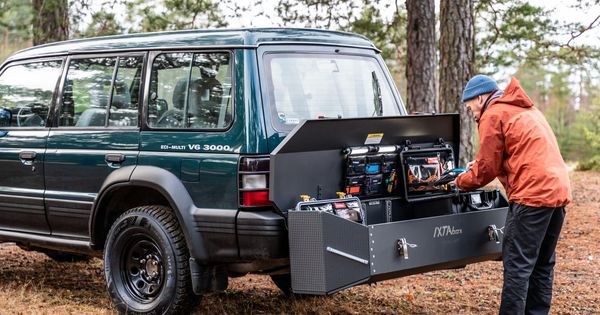
- Match your storage to the policy. If the policy needs a locked, enclosed space, an open tray with a tarp won’t do. Our ute tool storage guide compares drawers, canopies and toolboxes.
- Check apprentices’ and employees’ tools. Some policies extend to them, some don’t.
- Check the excess. A higher excess usually lowers the premium, but small claims may not be worth making.
See BizCover portable equipment quotes Affiliate link. We may be paid a commission if you buy. Not a recommendation of any policy: read the PDS and TMD first.
If your tools are stolen
- Report it to police and get a report number. Most insurers ask for one.
- Photograph the damage to the vehicle, lock or canopy before you fix it. That’s your evidence of forced entry.
- Tell your insurer quickly. Policies set time limits for notifying claims.
- Send your list. Tool register, receipts and serial numbers.
- List serial numbers with police so recovered tools can be traced back to you.
Then get back to work. Many tradies keep a basic backup kit at home or in the shed for exactly this reason, so a theft costs a morning rather than a week. If you rely on one or two specialist tools to earn, ask your insurer how quickly claims for those items are usually settled, and whether the policy helps with hire costs in the meantime.
How it fits with your other cover
- Public liability covers others, not your tools. Most builders and clients will ask for it.
- Commercial vehicle insurance may cover tools fixed to the vehicle on some policies, so check before doubling up.
- Home contents may limit or exclude business tools. Don’t rely on it without checking.
| Commonly covered (check your PDS) | Commonly not covered |
|---|---|
| Theft after forced and violent entry | Theft from an open tray or a vehicle left open |
| Accidental damage | Wear and tear, breakdown |
| Damage in a vehicle accident | Unexplained loss or disappearance |
| Specified high value items, up to their listed value | Unspecified items above the per-item limit |
If you’re setting up a new business, our sole trader setup guide has the full first-month checklist. A tool register takes about 30 minutes to make, and it means any quote or claim starts from the real replacement figure.
Common questions
Does my public liability insurance cover my tools?
No. Public liability covers injury to other people and damage to their property caused by your work. Your own tools need separate cover, usually called portable equipment or general property insurance.
Are tools covered if they're stolen from the back of the ute?
It depends on the policy. BizCover lists theft following forcible and violent entry, and theft of equipment securely attached to a vehicle with locks or padlocks. Loose tools in an open tray are often not covered. Check the security conditions in the policy wording.
Will home contents insurance cover my work tools?
Don't assume so. Home contents policies often limit or exclude tools and equipment used for business. Read your contents policy wording or ask your insurer before relying on it.
Is tools insurance tax deductible?
Premiums for insurance used in your business are generally deductible, but check with your registered tax agent for your own situation.