Walk onto any site in Australia and you’ll see the same handful of names on pants and shirts. Some tradies swear by one brand for life. Others buy whatever’s on special at the workwear shop on the way to the job.
Truth is, the brand matters less than people think. Two pairs of pants from the same brand can wear completely differently depending on the fabric and cut. This guide covers the main brands you’ll come across, what they’re generally known for, and the details that decide whether your gear lasts six months or three years.
A note on how this guide was put together: it’s based on brand ranges, Australian standards and ATO guidance, not a controlled wear test. We don’t give star ratings. Where we haven’t worn something on the job, we don’t pretend we have.
The main workwear brands
Hard Yakka
One of the best-known names in Australian workwear, with a range covering work pants, shorts, shirts, jackets and hi-vis. It’s stocked by most workwear stores and big retailers, which makes replacements easy. The range runs from classic cotton drill to stretch and lighter fabrics. Good if you want something familiar and easy to buy again in the same size.
Browse Hard Yakka Affiliate link. Opens the merchant site in a new tab.
KingGee
Another long-standing Australian brand with a very wide range, from basic drill pants to stretch cargo pants and work boots. KingGee and Hard Yakka cover similar ground, so it often comes down to which cut fits you better. Try both on before you buy five pairs.
Browse KingGee Affiliate link. Opens the merchant site in a new tab.
Bisley
Bisley is an Australian workwear brand known for work shirts, pants and a big hi-vis range. It’s common in uniforms for trade businesses, so if you’re kitting out a crew with embroidered logos, it’s worth a look. Like the others, it spans everything from basic cotton drill to more technical fabrics.
See Bisley work shirts on Amazon Australia Affiliate link (paid link). Opens Amazon in a new tab.
FXD
FXD is a newer Australian brand focused on fitted, stretch work pants and shorts with a modern cut. It’s popular with tradies who kneel, squat and climb all day and find traditional drill pants stiff. The fit is slimmer than the classic brands, so size up if you’re between sizes or have bigger legs.
See FXD work pants on Amazon Australia Affiliate link (paid link). Opens Amazon in a new tab.
Helly Hansen Workwear
Helly Hansen is a Norwegian brand best known for wet and cold weather gear. Its workwear range is more expensive than the local brands, but the waterproof jackets, softshells and thermal layers are designed for long days in bad weather. Worth considering if you work outdoors through a Melbourne or Hobart winter.
See Helly Hansen Workwear Affiliate link. Opens the merchant site in a new tab.
Boots: Steel Blue, Blundstone, KingGee and others
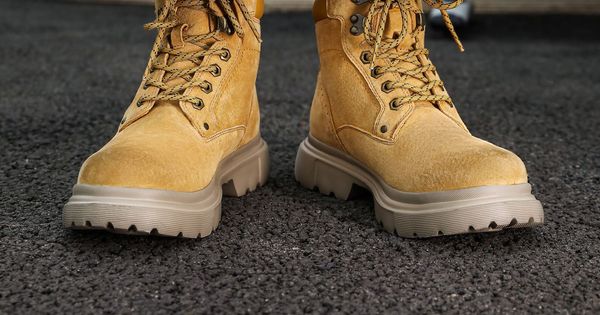
For safety boots, Steel Blue and Blundstone are two of the Australian names you’ll see most. Blundstone’s elastic-sided boots are an icon, and both brands make a wide range of lace-up and zip-sided safety boots. KingGee and others also make safety boots. Fit is personal. Buy boots in the afternoon when your feet are at their biggest, and wear the socks you work in.
What actually makes workwear last
Fabric and weight
- Cotton drill is the classic. It’s breathable and tough. Heavier fabrics last longer but are hotter. Manufacturers sometimes list the fabric weight in grams per square metre (gsm), which is a handy way to compare.
- Canvas is heavier again and very hard-wearing. Good for chippies and concreters, hot in summer.
- Ripstop has a grid weave that stops small tears spreading. Lighter and cooler than heavy drill.
- Stretch blends add elastane for movement. Very comfortable for kneeling and climbing, but they can wear through faster unless the knees are reinforced.
- Poly-cotton blends dry faster and hold colour better, but are less breathable in heat.
Construction details worth paying for
- Reinforced knees, ideally with pockets for knee pad inserts if you kneel a lot.
- Double or triple stitched seams at the crotch and pockets, where pants usually fail first.
- Gusseted crotch for movement without blowing a seam.
- Phone and tool pockets where you’ll actually use them. Ruler pockets and hammer loops are only useful if they’re positioned for your trade.
- UPF rating on shirts if you work outdoors. Sun protective clothing in Australia is tested against AS/NZS 4399, and a long-sleeve shirt with a good UPF rating is cheap insurance against skin cancer.
Hi-vis: what the standard says
Australian hi-vis garments are classified under AS 4602.1:2024, which updated the 2011 standard. The classes are:
| Class | For | How it’s made visible |
|---|---|---|
| D | Daytime use | Fluorescent fabric |
| N | Night or low light | Retroreflective tape |
| D/N | Day and night | Fluorescent fabric plus retroreflective tape |
The 2024 version also adds levels based on how much of the body the garment covers and where the tape sits, including requirements for arms and legs. Your employer or site sets the requirement, and road and rail work often has extra rules. If you’re buying for a crew, check the label shows the class and the standard.
For the full explanation of classes, the new levels and sun protection ratings, see our hi-vis guide.
Safety boots: the basics
Safety footwear in Australia is generally made to AS/NZS 2210.3:2019, which requires a toe cap tested to at least 200 joules of impact. Things to decide:
- Steel or composite toe cap. Both can meet the standard. Composite is lighter and better in temperature extremes. Steel can be slimmer.
- Lace-up, zip-sided or elastic-sided. Elastic-sided (pull-on) boots are quick on and off, which suits work where you’re in and out of homes. Lace-up boots give more ankle support. Some sites, particularly mining and civil, require lace-up boots, so check before you buy.
- Sole. Look for slip resistance and heat resistance ratings if you work on hot surfaces or wet floors. Electricians may need electrical hazard rated soles.
- Penetration resistance. A midsole plate stops nails and screws coming through. Essential on demolition and framing sites.
Replace boots when the tread is worn or the toe cap is exposed or damaged, not when they finally fall apart.
Our work boots comparison decodes the safety categories and compares Steel Blue, Redback and Blundstone.
Can you claim workwear on tax?
The ATO’s rules are clear and often misunderstood:
- Claimable: protective items such as hi-vis, steel-capped boots, safety glasses, hard hats and gloves, plus occupation-specific clothing. Sun protection such as sunscreen and hats may also be claimable if you work outdoors.
- Not claimable: ordinary clothes like jeans, plain work shirts, socks and everyday shoes, even if you only wear them for work.
Keep receipts. If you’re a sole trader, protective gear is a business expense. If you’re an employee, the ATO may ask you to show how each item protects you from a real risk in your job. Our sole trader setup guide covers record keeping.
Where to buy
Workwear stores let you try things on, which matters for pants and boots. Online is handy once you know your size in a brand. Some places we link to:
- WorkwearHub stocks a range of Australian workwear brands online.
- Amazon Australia carries a lot of workwear and boots, though check the seller and sizing carefully.
- Brand stores for Hard Yakka, KingGee and Helly Hansen sell direct.
Kitting out the rest of the ute too? See our guides to cordless drill brands and ute tool storage.
Shop workwear at WorkwearHub Affiliate link. Opens the merchant site in a new tab.
Browse on Amazon Australia
Affiliate links (paid links). Open Amazon in a new tab. Check the seller, the sizing and any safety rating on the listing.
Some well-known Australian workwear chains don’t run affiliate programs, so we don’t earn anything when you buy from them. Shop wherever has the right fit and price. Fit beats commission every time.
The short version
- Buy for your work: canvas or heavy drill for rough jobs, ripstop or stretch for movement and heat.
- Pay for reinforced knees and good stitching, not logos.
- Check hi-vis labels for the class you need.
- Get boots fitted properly and replace them before they fail.
- Keep receipts for the protective gear you can claim.
Common questions
What's the most hard-wearing fabric for work pants?
Heavy cotton drill and canvas are the traditional hard-wearing choices. Ripstop weaves resist tears spreading. Stretch fabrics are more comfortable but can wear faster on the knees unless they're reinforced. For tough work, look for reinforced knees and seams that are double or triple stitched.
What do the hi-vis classes D, N and D/N mean?
Under the Australian hi-vis standard, now AS 4602.1:2024, Class D garments are for daytime use and use fluorescent fabric. Class N garments are for night or low light and use retroreflective tape. Class D/N combines both for day and night use. Your site or employer decides which you need.
Are steel caps better than composite toe caps?
Both can meet the Australian safety footwear standard. Steel caps are usually thinner for the same protection. Composite caps are lighter, don't conduct heat or cold as much and won't set off metal detectors. Choose by comfort and site rules.
Can I claim workwear on tax?
The ATO says protective items such as hi-vis, steel-capped boots, safety glasses and gloves are generally claimable, as is occupation-specific clothing. Ordinary clothes such as jeans, plain shirts and everyday shoes are not, even if you only wear them at work.