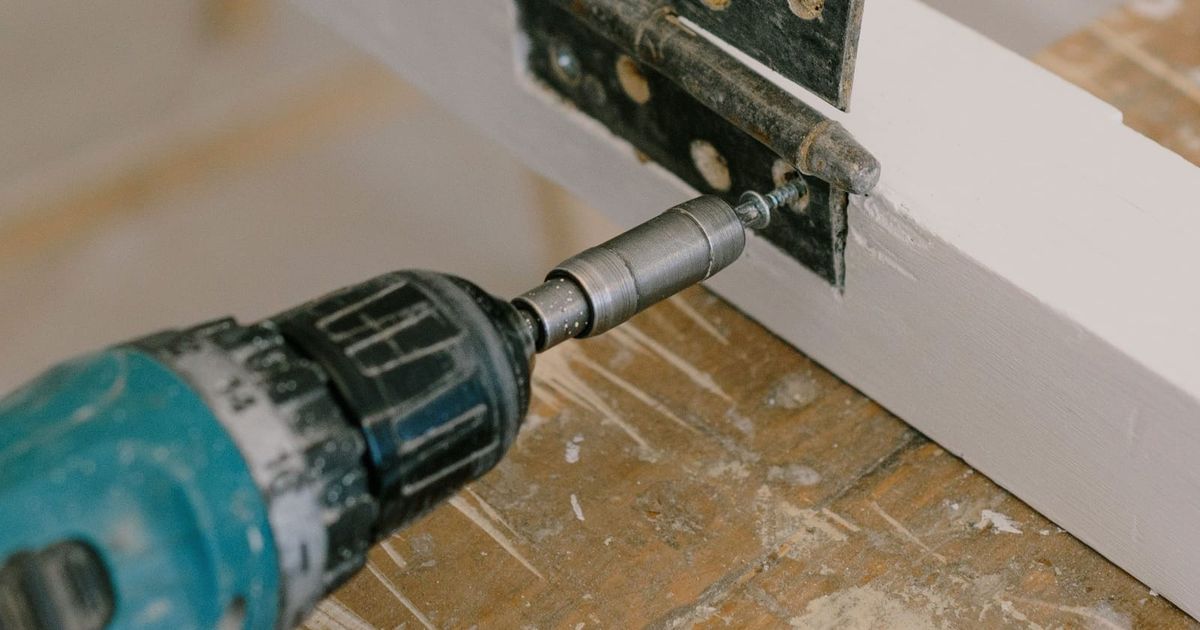
Walk onto any site and you’ll see the same pair of tools clipped to belts and sitting on benches: a drill and an impact driver, usually the same colour. To someone setting up their first kit, they look almost identical. They aren’t, and using the wrong one is how you strip screw heads, snap bits and wear out your wrist.
This guide explains how each tool works, what each is good and bad at, the bits you need, and how to buy them. It’s based on manufacturer and trade publication explanations, checked in October 2026. We haven’t run timed tests, and we don’t rank individual models here. For choosing a brand and battery platform, see our cordless drill brands guide.
How a drill driver works
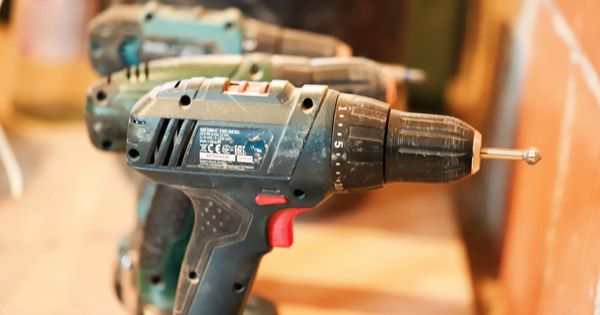
A drill driver (often just called a drill) turns the bit with steady, continuous rotation. Two features make it versatile:
- A keyless chuck that grips round shank drill bits, hole saws, spade bits and hex bits.
- An adjustable clutch, the numbered collar behind the chuck. It slips once a set torque is reached, so you can drive screws to the same depth without stripping them or punching through soft material.
Most drill drivers also have two gears: low speed for driving and large holes, high speed for small holes. A hammer drill (combi drill) adds a hammering action along the bit’s axis for drilling into brick and block. That’s a different mechanism from an impact driver.
How an impact driver works
An impact driver also rotates the bit, but inside it has a hammer and anvil mechanism. When the screw resists, the hammer delivers rapid rotational blows to the anvil. Those blows add a lot of torque in short bursts, which is why an impact can sink a long batten screw that would stall a drill or twist your wrist.
Key differences you’ll notice straight away:
- A 1/4 inch hex collet instead of a chuck. Bits push in and lock. It only takes hex shank bits.
- No clutch on most models. Some have speed or mode settings to reduce power for smaller screws.
- Less kickback to your wrist, because the impacts do the work rather than a constant twisting force.
- Less cam-out, the bit jumping out of the screw head, because the blows keep the bit seated.
- Noise. Impacts are loud when they’re hammering. Hearing protection is worth wearing.
- Compact size. Impact drivers are usually shorter front to back than a drill, which helps in tight spaces.
Which tool for which job
| Job | Drill driver | Impact driver |
|---|---|---|
| Drilling holes in timber, metal, plastic | Yes | Small holes only, with hex bits |
| Hole saws and spade bits | Yes | No |
| Long batten and decking screws | Can stall or strain | Yes |
| Coach screws and small bolts | Struggles | Yes |
| Small screws in cabinetry or soft material | Yes, with clutch | Easy to overdrive |
| Plasterboard screws | Possible | Possible, a dedicated screw gun is better |
| Masonry drilling | Hammer drill only | No |
| Nuts and wheel nuts | No | No, use an impact wrench |
For electricians, a drill handles holes for cable runs and boxes, and the impact handles fixings into studs and joists. For carpenters and deck builders, the impact driver does most of the fastening. For plumbers, the drill does most of the work with hole saws, and the impact helps with brackets and larger fixings.
Bits: impact-rated or they’ll snap
Impact loads are hard on bits. Standard driver bits can snap or round off quickly in an impact driver. Look for bits marked impact-rated (sometimes called impact duty). They usually have a torsion zone, a narrower section that flexes slightly to absorb the blows.
For drilling with an impact driver, you need hex shank drill bits, also preferably impact-rated. For anything bigger, use the drill.
A magnetic bit holder or a bit set with a holder makes swapping bits quicker. Bits are consumables, so it’s worth keeping spares on the ute.
See impact-rated bit sets on Amazon Australia Affiliate link (paid link). Opens Amazon in a new tab.
More bits on Amazon Australia
Affiliate links (paid links). Open Amazon in a new tab.
Buying: kits and battery platforms
Most brands sell a two tool combo kit with a drill driver, an impact driver, two batteries and a charger. Buying the pair together usually costs less than buying them separately, and you get two batteries so one can charge while you work.
The bigger decision is the battery platform. Cordless batteries generally only fit tools from the same brand and platform, such as Milwaukee M18, Makita 18V LXT, DeWalt 18V XR or Ryobi ONE+. Once you’ve got a few batteries, you’ll tend to stay with that brand. Our drill brands comparison covers platforms and warranty terms.
A few other points to check:
- Brushless motors are common on trade tools. They’re generally more efficient and run cooler than brushed motors.
- Bare tool listings (no battery or charger) are cheaper if you’re already on the platform.
- Weight and length matter if you work overhead or in tight spaces. Try them in the hand at a store.
Not sure which battery system to buy into? Our battery platforms comparison covers M18, LXT, XR and ONE+.
Common mistakes
- Using a standard bit in an impact. It’ll snap or round off, often within a few screws.
- Overdriving small screws. An impact has no clutch, so it can strip the thread, snap the head off or sink a screw through soft board. Use a lower speed setting or switch to the drill.
- Drilling big holes with an impact. It can be done with hex bits for small holes, but hole saws and big spade bits belong in a drill.
- Using the drill on long screws. A drill without enough torque stalls, and the reaction can twist your wrist. That’s the impact’s job.
- Forgetting the hammer mode. If your drill is a combi drill, check the hammer setting is off when drilling timber or metal.
- Mixing battery brands with adaptors. Third party adaptors can affect your warranty, so check the warranty terms first.
- Skipping eye and ear protection. Bits snap and impacts are loud. Safety glasses and hearing protection cost little compared with an injury.
Eye and ear protection on Amazon Australia
Affiliate links (paid links). Open Amazon in a new tab. Look for safety glasses marked AS/NZS 1337.1 and hearing protectors rated to AS/NZS 1270.
Looking after both tools
- Keep vents clear of dust. Blow them out now and then.
- Store batteries out of direct sun and heat, such as a closed ute cab in summer.
- Don’t run an impact flat out on a bolt that won’t budge. If it’s not moving, it’s the wrong tool.
- Record serial numbers. If your tools are stolen, insurers and police will ask for them. Our tools insurance guide explains what’s covered when the ute gets broken into, and our ute storage guide covers keeping tools locked away.
The short answer
If you can only buy one tool to start, a drill driver does more different jobs. If you do a lot of fastening, decking, framing or fixing to steel, you’ll want the impact driver as soon as you can afford it. Most tradies own both because they do different jobs, and having a drill bit in one and a driver bit in the other saves swapping bits all day.
Common questions
Can an impact driver drill holes?
It can drill small holes with hex shank, impact-rated drill bits, but it's not ideal. It lacks a clutch and a keyless chuck for round shank bits, and the impacts make precise holes harder. A drill driver is the better tool for drilling.
What's the difference between an impact driver and an impact wrench?
An impact driver has a 1/4 inch hex collet for screwdriver bits and is built for screws and smaller bolts. An impact wrench has a square drive (commonly 1/2 inch) for sockets and much higher torque, for nuts and bolts such as wheel nuts.
Do I need special bits for an impact driver?
Use bits marked as impact-rated. Standard bits can snap or wear quickly under impact loads.
Can I buy power tools on Amazon and keep the warranty?
Check first. Milwaukee Australia says its warranty isn't valid for products bought from non-authorised websites such as Amazon and eBay, and other brands require purchase from authorised sellers. Our cordless drill brands guide covers warranty terms by brand.